Why Renewals Are Won or Lost Before the Renewal Call
Apr 08, 2026Have you ever walked into a renewal call feeling like everything is riding on that one conversation?
The pressure is real. You are thinking about pricing, defending value, handling objections, and hoping the conversation goes your way. But here is the uncomfortable truth that most Customer Success professionals learn the hard way:
Renewals are almost never won or lost on the renewal call.
They are decided months before that conversation ever happens.
In this episode, we break down why so many renewals feel stressful, why teams end up firefighting churn at the last minute, and what actually drives predictable retention and expansion. If you care about net revenue retention, want to stop scrambling before renewals, and are ready to operate like a revenue driven CSM, this is the mindset shift you need.
Renewals Are Not Events, They Are Outcomes
Right now, every SaaS company is focused on one thing, net revenue retention.
Budgets are tighter, CFOs are asking harder questions, and leadership teams are prioritizing efficiency over growth at all costs. Retaining and expanding existing customers is no longer a nice to have. It is the core growth strategy.
But here is where most teams get it wrong.
They treat renewals like a moment in time instead of a result of everything that happened before.
A renewal is not like a sales deal where a decision happens in one or two conversations. It is the accumulation of value realization across the entire customer journey.
If your customer has not experienced clear, measurable progress toward their goals, the renewal call simply becomes the moment they finally say it out loud.
Renewals are emotional decisions wrapped in financial language.
If your customer does not feel progress, confidence, and impact, no slide deck or pricing strategy will save the deal.
What Most Customer Success Teams Get Wrong
Let’s talk about the patterns that quietly kill renewals.
First, onboarding is treated as implementation instead of transformation. Teams focus on setup, training, and features, but forget to anchor everything back to business outcomes. Customers did not buy your product to complete onboarding tasks. They bought it to solve a problem and drive change.
Second, success is not properly documented or quantified. Many teams create success plans, but they are not tied to commercial metrics. Without clear ROI, the renewal becomes subjective. And subjective value is dangerous because it is open to interpretation.
Third, teams rely too heavily on a single champion. If you are not multithreading and building relationships with decision makers and budget owners, your renewal is sitting in the hands of someone without real influence.
Fourth, value is only discussed during quarterly reviews. If the only time you talk about ROI is in a formal presentation once every few months, value feels disconnected from daily usage. It becomes something you “present” instead of something the customer experiences continuously.
And finally, many teams confuse activity with impact.
Calls, emails, usage, and meetings do not equal value. A busy account is not the same as a successful account. Renewals are protected by outcomes, not activity.
What To Do Differently To Drive Predictable Renewals
If you want to stop firefighting churn and start building predictable renewals, you need to shift how you operate from day one.
Start with a revenue success plan. This is not a checklist. It is a living document that connects your product to the customer’s strategic goals. It should clearly outline business objectives, measurable outcomes, ROI metrics, timelines, and risks. And most importantly, it should be used in every meaningful conversation.
Next, focus on leading indicators of renewal risk. Do not rely only on NPS, CSAT, or product usage. Look at executive alignment, stakeholder engagement, adoption depth, and alignment with company priorities. Understand your customer’s budget cycle and know exactly who owns the budget.
Then, make every interaction a value conversation. Every call, every email, every touchpoint should answer three simple questions:
What progress have we made
What measurable impact can we show
What is the next milestone
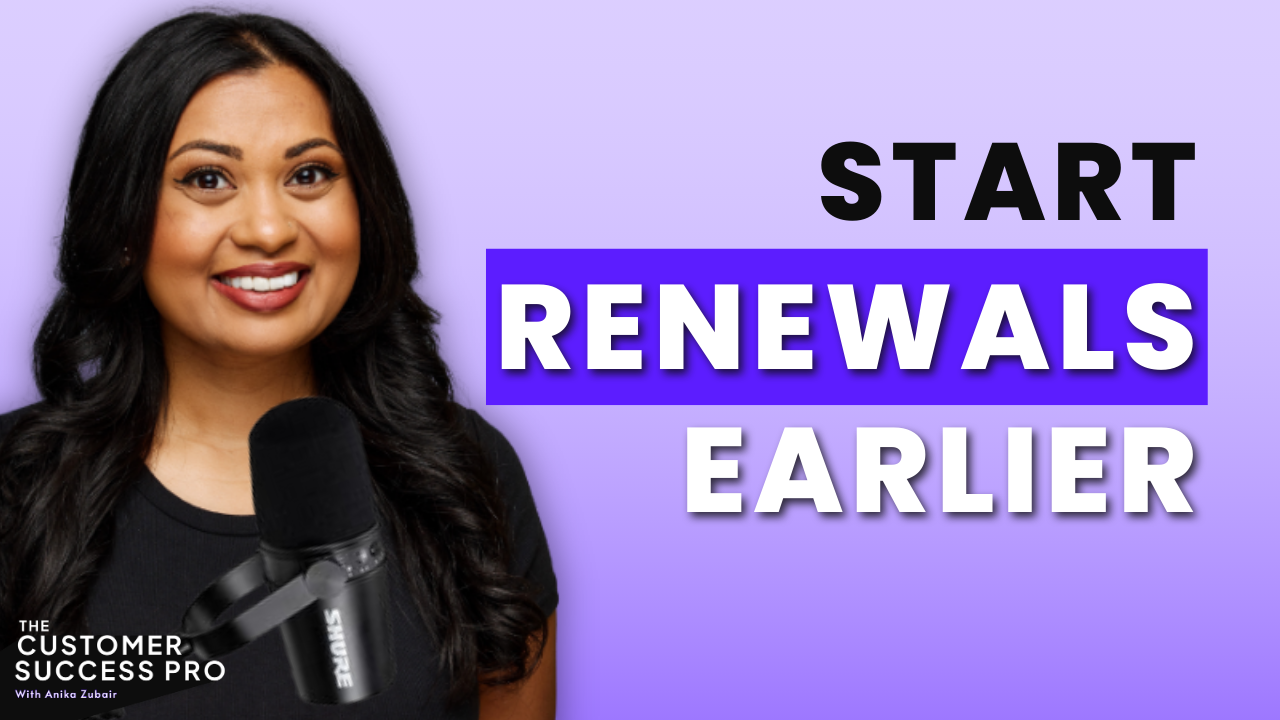
Do not wait until 60 days before renewal to start talking about value. Start 120 days out or earlier and frame the conversation around strategy and outcomes, not pricing.
And finally, prioritize executive alignment.
If you cannot clearly explain your product’s value in terms of revenue, cost savings, or risk reduction, then you are not positioned strongly for renewal. Your product must be tied to a strategic initiative. Otherwise, it becomes optional.
And optional tools are always the first to go.
Key Takeaways
Renewals are not decided in a single conversation. They are built over time through consistent value delivery.
If you take away anything from this episode, let it be this:
Renewals are won in onboarding, when you define transformation
They are won in success planning, when you tie work to revenue
They are won through multithreading, when you engage decision makers
They are won through continuous value storytelling, not quarterly updates
They are won through executive alignment, not just champion relationships
If you are scrambling 30 days before renewal, the real issue started months ago.
The best Customer Success professionals do not save renewals. They design them.
And here is your challenge. Pick one account renewing in the next six months and ask yourself:
Can I clearly articulate their top three business goals
Do I have quantified evidence of progress
Have I validated value with an executive stakeholder recently
If the answer to any of these is no, that renewal is at risk.
Do not wait. Start the conversation now.
🎧 Listen on your favorite platform:
👉 YouTube
👉 Spotify
Author