How to Reinforce Learning After Your Annual Kickoff: 5 Essential Strategies
Mar 18, 2026January and February are kickoff season in the B2B SaaS world. Your LinkedIn feed fills with photos of team offsites, big stages, ambitious revenue targets, and leaders celebrating the start of a new year.
Sales Kickoffs. Revenue Kickoffs. Go To Market Kickoffs. Customer Success Kickoffs.
And honestly, they are exciting.
Kickoffs bring teams together. They align everyone around the company vision. They generate energy and motivation to tackle ambitious goals like increasing Net Revenue Retention, reducing churn, and driving expansion from existing customers.
But by March, something starts to happen inside many organizations.
The excitement fades.
Teams slowly drift back into reactive habits. Customer conversations become check in calls again. Forecasting becomes messy. Upsells feel accidental instead of strategic.
If you have ever wondered why your annual kickoff created inspiration but not lasting change, you are not alone.
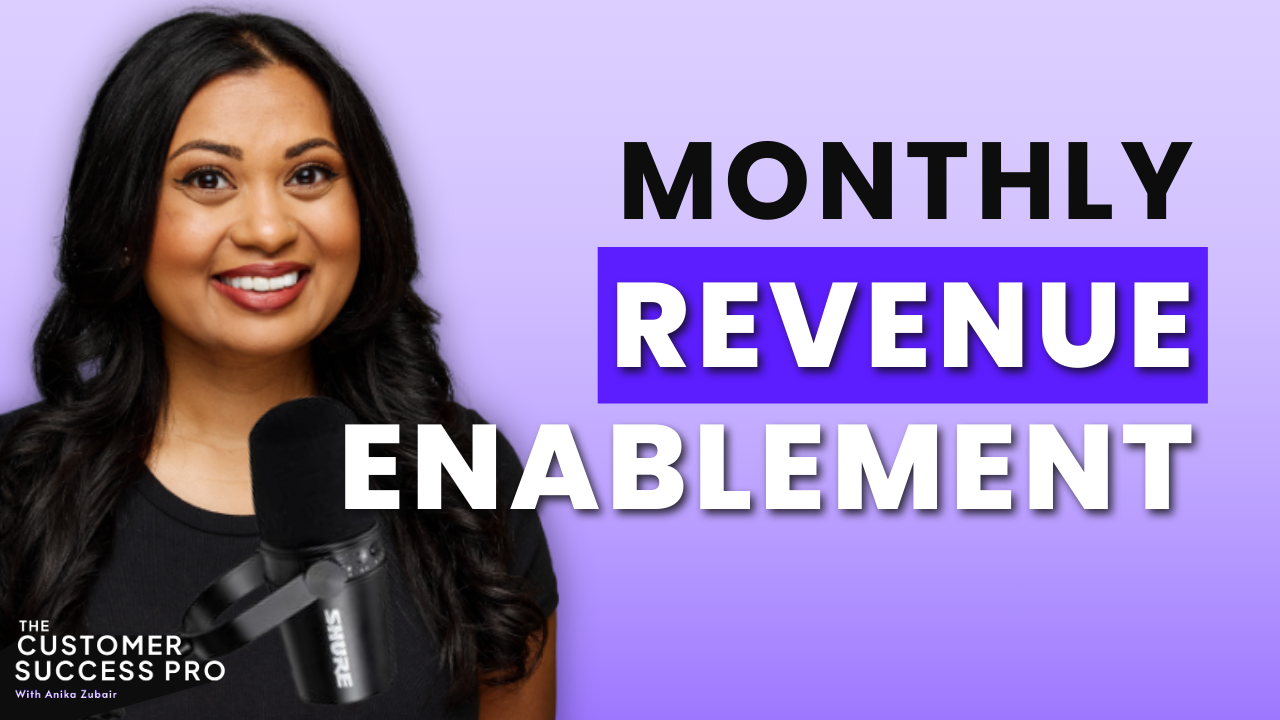
In this episode of The Customer Success Pro Podcast, Anika Zubair explains why kickoff events alone do not drive revenue growth and what Customer Success leaders must do instead to build predictable retention and expansion.
Kickoffs Create Energy But Not Execution
Annual kickoffs play an important role in aligning teams around vision and strategy. They are meant to spark enthusiasm and remind everyone what success looks like for the year ahead.
However, inspiration is not the same as execution.
Many companies invest enormous resources into kickoff events. Leadership teams spend months preparing slides, strategy sessions, forecasts, and training workshops. Organizations fly teams across the world to attend multi day events designed to align everyone around revenue goals.
But research in learning psychology shows that without reinforcement, people forget up to seventy percent of what they learn within days.
This phenomenon is known as the forgetting curve.
Even when employees are fully engaged during training sessions, most of the information fades quickly if it is not repeated and practiced consistently.
That means the valuable insights shared during a kickoff event often disappear long before teams can operationalize them in real customer conversations.
Kickoffs are powerful sparks of motivation, but they are not long term behavior change strategies.
Why Customer Success Teams Fall Back Into Old Habits
When teams return from kickoff events, they immediately jump back into busy schedules filled with customer meetings, emails, and internal updates.
Customer Success Managers are often double or triple booked. They move quickly from one call to another with very little preparation time.
Under this pressure, people default to the behaviors they already know.
For many Customer Success teams, those behaviors include:
Weekly or monthly check in calls
Feature updates instead of outcome conversations
Reactive renewal discussions
Limited expansion planning
Even when leaders introduce new frameworks for ROI storytelling, strategic discovery, or upsell identification during kickoff events, those frameworks rarely become daily habits.
Why?
Because most organizations treat kickoff training as a one time event rather than an ongoing enablement strategy.
Revenue skills are not developed through exposure. They are developed through repetition.
Just like elite athletes train continuously throughout the season, Customer Success professionals need consistent practice to build confidence in renewal conversations, executive engagement, and expansion planning.
The Biggest Mistakes CS Leaders Make After Kickoffs
Many Customer Success leaders assume that once a strategy or playbook has been introduced, teams will automatically execute it.
Unfortunately, that rarely happens.
One common mistake is assuming documentation equals training. Creating a new playbook or QBR deck does not mean the team understands how to use it effectively.
Another mistake is overwhelming teams with information during kickoff events. In just a few days, teams might learn about forecasting, white space analysis, stakeholder mapping, product updates, AI tools, and expansion strategies.
While all of this information is valuable, it is impossible for anyone to operationalize ten new frameworks at once.
The third and most damaging mistake is the lack of a reinforcement plan.
Leaders introduce new strategies and revenue targets but fail to create a structured cadence for practicing those skills with their teams.
Without reinforcement, even the best frameworks remain theoretical knowledge rather than real world capability.
The Monthly Revenue Enablement Rhythm
The solution is not another large event.
It is consistency.
Instead of relying on annual training sessions, Customer Success leaders should implement a monthly enablement rhythm focused on developing revenue skills step by step.
Each month should focus on one key capability.
For example:
Month one could focus on renewal forecasting and risk identification. Teams review live accounts and align on leading indicators of churn.
Month two could focus on white space analysis. CSMs analyze product usage data and identify expansion opportunities tied to customer outcomes.
Month three could focus on ROI storytelling. Teams practice connecting product usage to measurable business impact during renewal conversations.
Month four could focus on strategic discovery. CSMs practice deeper questioning techniques that uncover growth opportunities within customer organizations.
By focusing on one capability at a time and applying it to real customer accounts, teams build confidence and consistency.
Over time, these repeated sessions develop the revenue muscle that Customer Success teams need to drive predictable growth.
Key Takeaways
Annual kickoff events are powerful but they are not a revenue strategy.
Without reinforcement, most of the insights shared during kickoff training fade quickly. Teams return to familiar habits and reactive customer engagement.
Revenue skills require repetition and real world practice.
Customer Success leaders should implement a monthly enablement rhythm that focuses on one capability at a time, applies learning to live accounts, and builds long term confidence across the team.
Consistency creates confidence.
Confidence creates better customer conversations.
Better conversations create revenue growth.
If your team wants to achieve stronger renewals, predictable expansions, and higher Net Revenue Retention, the key is not more inspiration.
The key is repetition.
🎧 Listen on your favorite platform:
👉 YouTube
👉 Spotify
Author