How to Handle a Price Increase Without Breaking Customer Trust
Aug 05, 2026There is one conversation in customer success that almost nobody wants to have: telling a customer their price is going up. Most CSMs delay it, bury the number in the third line of an email, and apologize before the customer has said a word. Then they are shocked when a renewal that used to be a formality turns into a fight.
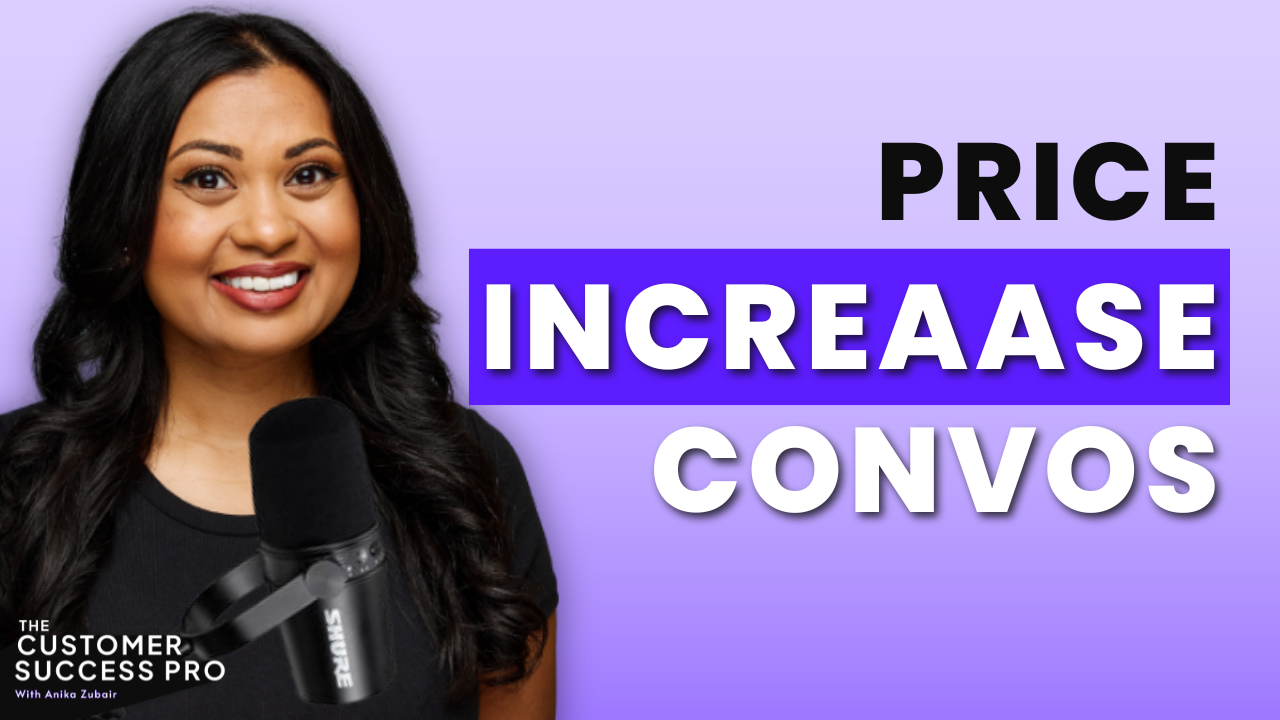
In this solo episode of The Customer Success Pro Podcast, host Anika Zubair makes the case that a price increase is not what breaks a customer relationship. How it is handled is what breaks it. She walks through the five mistakes she sees most often, several of which she made herself, and gives CSMs a method for delivering the number with a value story that lands.
Why Value, Not Discounting, Protects Revenue
Look at your own subscriptions. Netflix, Spotify, Disney, your gym: almost all raised prices last year. What decides whether you stay is rarely the number. Watched three shows you loved last month? You grumble and renew. Not opened the app in six weeks? You cancel. Same price, different decision, and the only variable is perceived value.
The B2B SaaS data says the same. Customers acquired with deep discounts, meaning more than 40% off, churn at two to three times the rate of full price customers. A discount handed over to win a deal does not buy loyalty, it buys a customer far more likely to leave. Pricing research also shows companies with strong value alignment see up to 30% lower churn than those whose pricing feels disconnected from value.
Anyone can renew at a flat price when the product is loved. The CSM who can hold an increase, defend it with value, and keep the relationship warm is the one protecting revenue and getting promoted.
The Five Mistakes That Cost You the Renewal
Loss of trust on a price increase is almost never about the number. It is about how the number was delivered. Anika names five patterns she sees repeatedly.
- Leading with the number and apologizing for it. The moment you apologize, you have told the customer that even you do not believe it is worth it.
- Revealing the increase at the 11th hour, buried in a renewal quote two weeks out. A price increase is hard enough. A surprise one is the fastest way to lose an executive buyer.
- Showing up empty handed with no tracked outcomes, which asks a customer to pay more on faith.
- Anchoring the new price against the old one, which traps you in a math argument you cannot win. Any increase looks bad next to a smaller number.
- Caving the second the customer pushes back, which teaches them your price is fake and that pushing back always works.
Every one of these comes from the same root problem: reacting instead of leading.
The FRAME Method for Price Increase Conversations
The fix is a five step method built on one idea. Either you frame the conversation, or the customer frames it for you.
F, frame the value first. Never start with the number. Walk in knowing what the customer achieved since their last renewal: hours saved, revenue influenced, goals hit. This is value tracked all year, not invented the morning of the call, so the number lands on proof.
R, reveal it early. Ideally a full quarter before renewal. Early and honest reads as a partner being straight with you. Late reads as something being done to you. Same news, different trust outcome.
A, anchor with context. Anchor the new price against two things: the value received and the cost of leaving, including lost time, risk, and disruption. You decide which comparison the customer makes.
M, meet the objection. When pushback comes, do not fold and do not fight. Get curious. Ask whether this is a budget issue, a timing issue, or a value issue. Those are different problems with different answers.
E, earn the yes. Close by tying the new investment to the roadmap and next year's goals, not last year's invoice. The yes becomes something the customer hands you, not something you extract.
Anika learned this on a six figure account where she made every mistake on the list. Her manager's feedback stuck: she walked in as a messenger when she needed to be a partner. She rebuilt the conversation around value, got curious when the objection came, and found the real problem was justifying the increase to an internal CFO. So she built that business case for them. They renewed at the new price and expanded four months later.
Key Takeaways
A price increase is turbulence, not a crash. What frightens passengers is not the bumps, it is silence from the cockpit. Be the calm voice explaining what is happening and why.
Discounting does not protect accounts, value does. Never lead with the number and never apologize for it. Reveal pricing changes a quarter out. Anchor against value and the cost of switching, never last year's invoice. Meet objections with questions, because most pushback is really about value, clarity, or an internal budget fight.
This week, pick one account renewing in the next two quarters and write down every outcome it achieved with you this year. If you cannot fill the page, that is not a pricing problem, it is a value tracking problem.
🎧 Listen on your favorite platform:
🔹 YouTube
🔹 Spotify
Author