
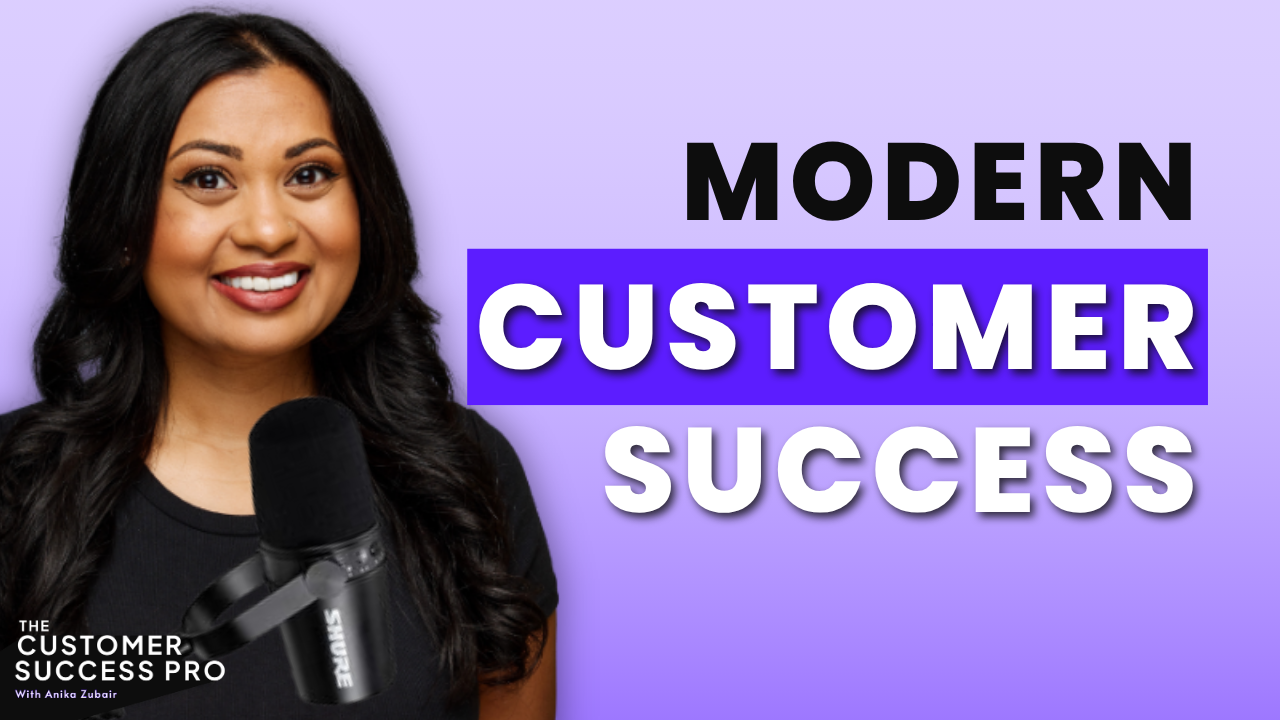
Customer Success Is Now a Revenue Team, But No One Trained You for It
Apr 22, 2026Customer Success has changed, fast.
If you work in B2B SaaS right now and feel like your job expectations have shifted overnight, you are not imagining it. Many Customer Success professionals are now being asked to own renewals, forecast expansion, influence pipeline, and prove business value in a way that was not expected a few years ago. The pressure is real, and for a lot of teams, the training never caught up.
That is the heart of this episode. Customer Success has been promoted into a revenue role, but many CSMs and CS leaders were never properly trained to think commercially. They were taught to build relationships, answer questions, support adoption, and keep customers happy. Those skills still matter, but they are no longer enough on their own.
Today, CS professionals are being measured on retention, expansion, and Net Revenue Retention. That means the role is no longer just about being helpful. It is about protecting and growing revenue.
Why Customer Success Has Become a Revenue Function
Anika makes one thing very clear in this episode. Customer Success has always had the potential to be a revenue function, but the current SaaS market has accelerated that shift.
Over the past several years, the tech industry has been hit by massive changes. Companies experienced pandemic disruption, layoffs, tighter budgets, and now the growing impact of AI. As a result, investors and executives are watching every dollar more closely. Growth is harder to achieve, and businesses are looking for more efficient ways to protect and increase revenue.
That is why existing customers matter more than ever.
Once a company reaches a certain stage, long term growth cannot rely on new logo acquisition alone. The biggest opportunity often sits inside the current customer base. Renewals, cross sell opportunities, expansion, and customer lifetime value all become central to business performance. That means Customer Success is no longer seen as a support team. It is one of the most important revenue drivers in the business.
This shift is showing up everywhere. CS teams are being asked to own renewals, contribute to upsells, and forecast
The Big Problem, Expectations Changed but Training Did Not
The biggest challenge is not that Customer Success is now tied to revenue. The biggest challenge is that many teams were never taught how to operate this way.
A lot of CSMs entered the field from support, customer service, teaching, or other service oriented backgrounds. They were not trained in commercial discovery, objection handling, forecasting, renewal strategy, or expansion planning. Yet those are the exact skills companies now expect them to use every day.
This creates a painful disconnect.
CS teams are still running check in calls, reporting on usage, and reacting late in the customer lifecycle. At the same time, leaders are asking questions like: Where is growth coming from? How accurate is your forecast? What does your expansion pipeline look like?
That tension leads to some very common mistakes.
The first mistake is believing that strong relationships naturally lead to revenue. Relationships matter, but they are only the first step. A customer can like you, trust you, and still not renew. Revenue comes from outcomes, not rapport alone.
The second mistake is staying stuck in helpful mode. Answering questions, walking through features, and solving tactical issues may feel productive, but that work alone does not position you as a strategic revenue partner. In many cases, AI is already starting to handle parts of that work.
The third mistake is treating renewals and expansions like isolated calendar events. Too many teams wait until 60 or 90 days before renewal to start talking about value. By then, it is often too late. Value is not built at renewal time. It is built in every conversation leading up to that moment.
The 3 Skills Every Revenue Focused CSM Needs
If Customer Success is now a revenue function, then CSMs need a new skill set. In this episode, Anika highlights three core skills every Customer Success professional needs to master.
The first is COMMERCIAL DISCOVERY.
This goes far beyond onboarding questions or a casual “how are things going?” Commercial discovery means understanding how the customer’s business makes money, where they lose money, and what their top priorities are. If you do not understand the business model and business pressures of your customer, you cannot tie your solution to measurable value.
The second is VALUE ARTICULATION.
CS professionals must be able to clearly explain how their product impacts revenue, efficiency, or risk. Not features. Not usage. Impact. Customers need to understand what result they are getting from their investment. If you cannot confidently connect the product to business outcomes, renewal and expansion conversations will always feel harder than they need to.
The third is EXPANSION STRATEGY.
Expansion is not about becoming pushy or salesy. It is about identifying where more value can be created. That might mean new teams, new use cases, stronger adoption, or solving additional problems inside the customer’s business. Great expansion strategy starts with customer needs and connects those needs to a clear path forward.
When Customer Success professionals build these three skills, they stop reacting and start leading.
Key Takeaways
This episode is a wake up call for anyone in Customer Success who still sees their role as purely relationship management.
Customer Success is now expected to protect revenue, forecast renewals, drive expansion, and speak the language of business impact. That shift can feel uncomfortable, especially if you were never trained for it, but it also creates a huge opportunity. The CS professionals who learn to think commercially will stand out quickly.
Here are the biggest takeaways from this episode:
- Customer Success is no longer just a support function. It is a revenue function.
- Strong relationships matter, but relationships alone do not guarantee renewals or growth.
- Renewals are not won at the renewal meeting. They are shaped in every conversation before it.
- Value must be tied to business outcomes like revenue growth, efficiency, or risk reduction.
- The three skills that matter most are commercial discovery, value articulation, and expansion strategy.
Anika ends the episode with a simple but powerful challenge. Pick one customer account and answer these three questions:
What is this customer’s top business priority right now?
How is your product directly impacting that priority?
Where is there an opportunity to expand value?
If you cannot answer those questions, that is your starting point. That is the gap between managing an account and owning revenue.
🎧 Listen on your favorite platform:
👉 YouTube
👉 Spotify
Author