The 3 Revenue Levers Every CSM Must Master in 2026
Jan 21, 2026Introduction
Why do some Customer Success professionals consistently hit renewal and revenue targets while others struggle, even when they are working longer hours and managing the same size book of business?
This question comes up constantly in Customer Success teams. The gap is not effort, personality, or luck. It comes down to knowing which revenue lever to pull and when.
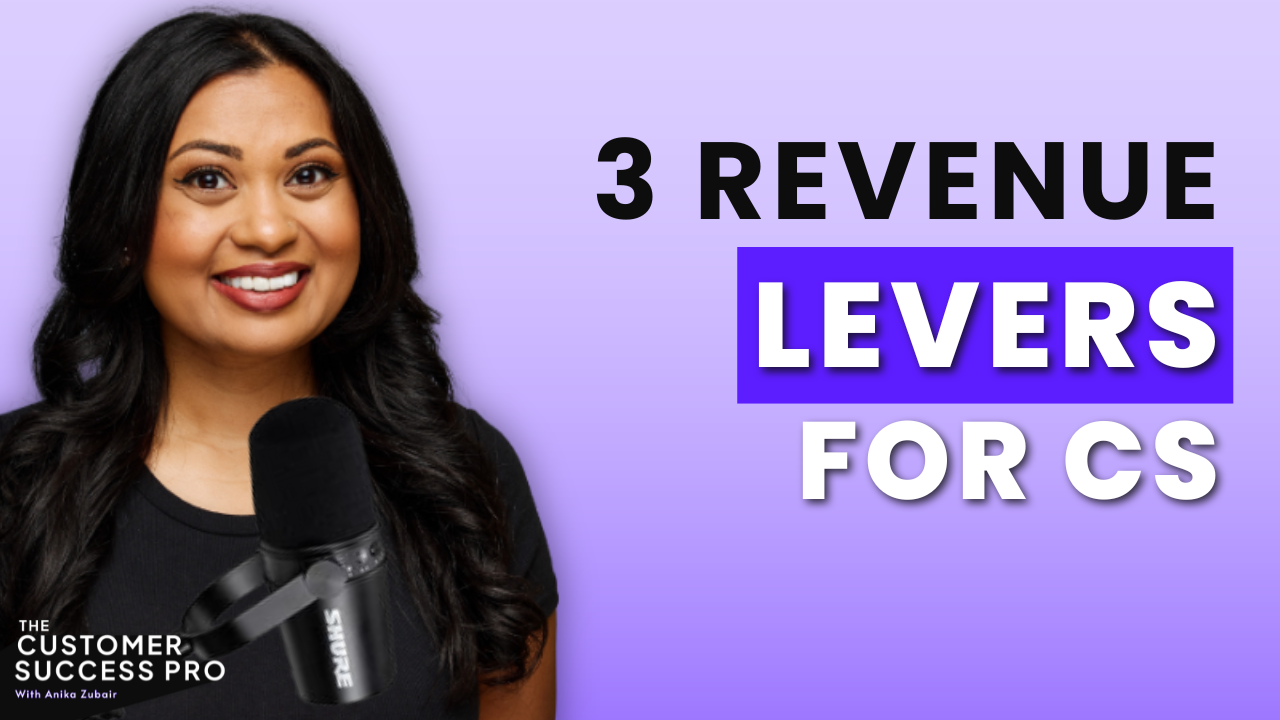
In this episode of the Customer Success Pro Podcast, Anika Zubair breaks down the three revenue levers that separate task focused CSMs from true revenue advisors. These are the levers that directly influence renewals, expansion, and long term customer growth.
As we move into 2026, Customer Success is being held to a higher commercial standard. CSMs are expected to influence revenue, lead strategic conversations, and protect retention without relying on reactive firefighting. This episode is designed to help you make that shift with clarity and confidence.
Whether you officially own revenue or not, these levers determine how your impact is perceived and how your career progresses.
Why Renewals Are Lost Long Before the Renewal Call
One of the biggest mistakes CSMs make is treating renewals like a finish line rather than something influenced across the full customer journey.
Renewals are not decided during the renewal call. They are shaped weeks and months earlier through everyday interactions, adoption patterns, and executive conversations.
When Customer Success teams operate reactively, they stay busy without moving the needle. Waiting for customers to raise their hands, responding only to health score alerts, or scrambling in the final quarter creates unnecessary risk.
Another common issue is treating every customer the same. Loud customers are not always your most valuable customers. High potential accounts often require a different level of proactive focus, yet they are frequently overlooked in favor of whoever is emailing the most.
Finally, many CSMs confuse activity with value. Meetings, emails, follow ups, and beautifully designed QBR decks do not automatically lead to renewals. Value is only created when customers make progress toward meaningful outcomes.
If customers cannot clearly articulate what outcomes they are achieving and why your product matters, renewals become stressful and unpredictable.
Adoption Momentum
Adoption momentum is the leading indicator of every renewal.
Customers who consistently move from awareness to usage to habit are far more likely to renew and expand. Yet many CSMs only review adoption quarterly or during QBR preparation.
In 2026, high performing Customer Success professionals track adoption weekly. They use that data to guide conversations, not just report on it.
Adoption momentum is not about checking whether customers logged in. It is about understanding how usage connects to outcomes and guiding customers toward what comes next.
Customers look to CSMs as their strategic guide. When you proactively identify gaps, recommend next steps, and align usage with business goals, you create forward momentum that protects retention long before renewal discussions begin.
Executive Alignment and Expansion Visibility
Executive alignment is the lever that changes everything.
Decision makers do not renew based on product love or feature usage. They renew based on business value. Specifically, value tied to revenue growth, risk reduction, and operational efficiency.
CSMs often stay too close to champions and miss opportunities to build trust with economic buyers. Without executive alignment, renewals are fragile and expansion is unlikely.
Every success conversation should ladder up to outcomes executives care about. When leaders can justify your value internally, renewals become far easier to secure.
The final lever is expansion visibility.
Expansion never happens by accident. It is the result of strong adoption, executive trust, and intentional planning.
Expansion visibility means knowing where growth is possible, what is blocking it today, and what actions you can take over the next ninety days to influence it.
When you focus on these three levers each week, you move from reacting to leading. You stop being a task doer and start becoming a revenue driver.
Key Takeaways
Mastering revenue in Customer Success does not require doing more. It requires focusing on the right things.
Here are the key takeaways from this episode:
• Renewals are influenced across the full customer journey, not at the finish line
• Adoption momentum is the strongest early indicator of renewal success
• Executive alignment is built around business outcomes, not features
• Expansion requires visibility, intention, and action
• Measuring success by levers moved is more powerful than measuring meetings attended
Weekly challenge: choose five accounts from your book of business. Map each one to the three revenue levers. Pick one lever per account and take one intentional action this week.
Small, consistent actions compound into predictable renewals and growth.
🎧 Listen on your favorite platform:
👉 YouTube
👉 Spotify
Author